Table games
Blackjack Basic Strategy Explained
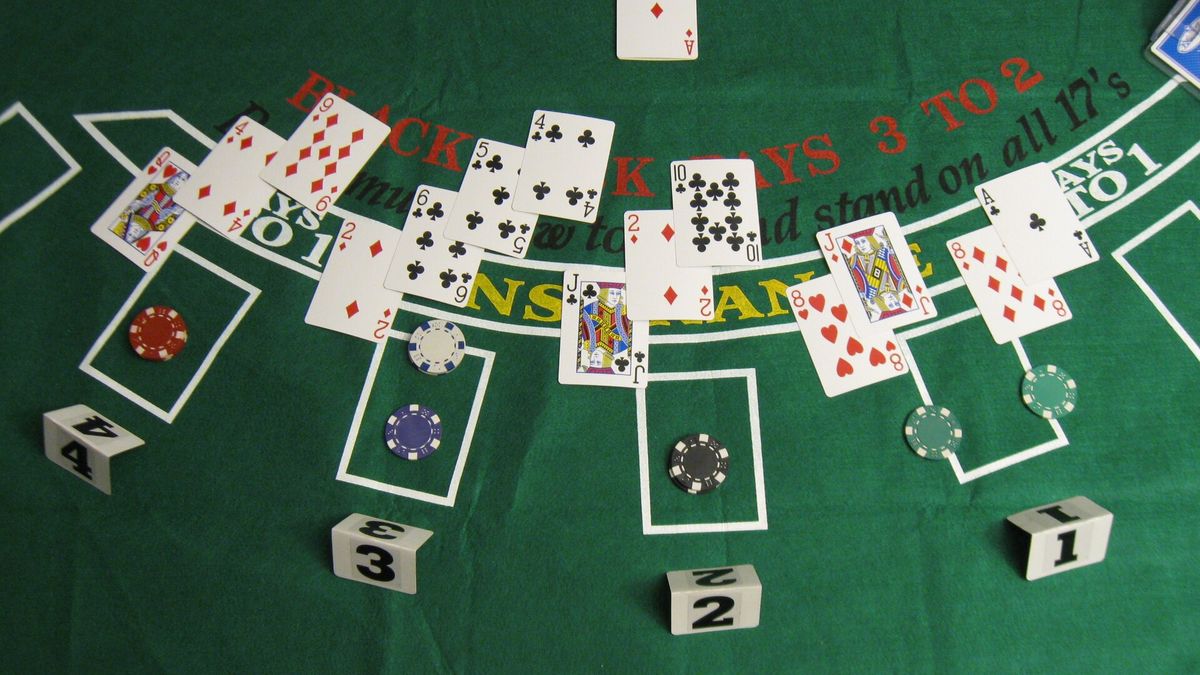
Blackjack basic strategy is the mathematically calculated best decision for every combination of the player's hand and the dealer's up card. It gives a recommended move, hit, stand, double or split, for a specific set of table rules, and it is usually printed as a chart.
Basic strategy is not a way to win. Played without mistakes, it brings the house edge down to roughly 0.5% on a table with good rules, but it does not remove it: no system beats the house edge, and over many hands the casino still comes out ahead. What the chart does is stop you giving away extra money through guesswork.
The calculations are done by computer against all possible outcomes, considering every rule, so when a rule is changed, the chart has to be changed too. Before using a chart you need to know the table's rules, and the chart must match them. The variations that matter most are:
- the number of decks
- whether the dealer hits or stands on soft 17
- whether you may double after splitting
- whether surrender is offered
- whether a blackjack pays 3:2 or only 6:5
On this page
How to read the chart
The chart is essentially a grid. Across the top is the dealer's up card, from 2 to ace, and down the side is your hand, split into hard totals, soft totals (hands where an ace counts as 11) and pairs. The cell where they meet is your play. A handful of rules cover a large share of hands and are worth learning first:
- Always split aces and eights. Two aces make a weak soft 12 and two eights a hard 16, the worst total in the game; each is better played as two hands.
- Never split tens or fives. A pair of tens is already 20, and two fives make a hard 10, a strong hand for doubling.
- Double on 11 against most dealer cards, on 10 against a dealer 2 to 9, and on 9 against a dealer 3 to 6. If the table does not allow the double, hit instead.
- Stand on hard 17 or more, whatever the dealer shows.
- Hard 12 to 16: stand against a dealer 2 to 6 (but hit 12 against a 2 or 3), and hit against a 7 or higher.
- Soft 17 or less: never stand; hit or double.
Why the chart changes from table to table
The charts are rule-specific, and most rule changes move the house edge by a fraction of a percentage point. A dealer who hits soft 17 is worse for the player than one who stands. Not being allowed to double after splitting, or being allowed to double only on 10 and 11, also raises the edge slightly. Late surrender, which lets you give up half your stake once the dealer has checked for blackjack, lowers it a little; it is typically used on hard 16 against a dealer 9, 10 or ace, and on hard 15 against a 10. Fewer decks generally help the player.
The biggest single change is the payout on a blackjack. At 3:2, a ₹1,000 stake wins ₹1,500; at 6:5 it wins only ₹1,200. That one rule costs the player more than all the other common variations, and no chart can make up for it, so it is the first thing to look for in the table rules.
What basic strategy can and cannot do
Charts are a representation of the strategy, and reading one well means knowing the rules, understanding what every cell means and using the version made for that game. The best the numbers from a chart can do is reduce the house edge's effect as much as possible. Every hand is still a bet with negative expected value, the chart says nothing about how much to stake, and changing stakes after wins or losses does not alter the maths. Card counting is a separate technique and is not part of basic strategy.
Related guides
 Table gamesRoulette
Roulette is one of the oldest casino games with many strategies for beating the house. Now players from India…
- Table gamesRoulette payouts
Payouts and true odds for every roulette bet, from straight up at 35:1 to red or black at 1:1, and why the…
 Table gamesBlackjack
Blackjack is one of the oldest table games played at casinos around the world. Pro-Casinos shows you…